Your Gala Is More Than One Night of Fundraising
Turn your gala into a year-round engine for stronger donor relationships, deeper engagement, and lasting fundraising growth beyond one night.
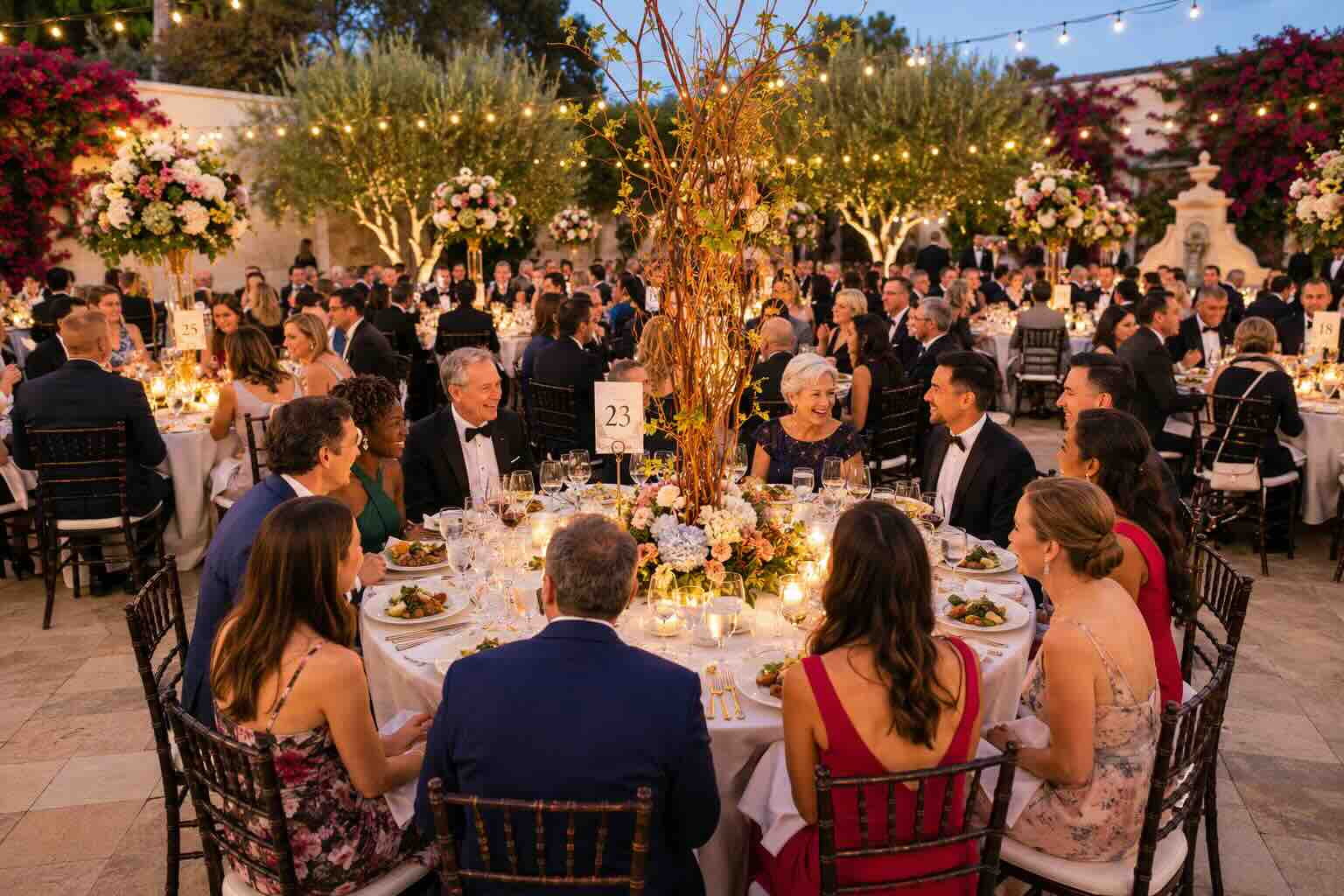
Long before the first guest arrives at a gala, your team has already been building the experience they will walk into.
Staff have spent months planning the program, managing sponsors, selling tickets, organizing tables, sourcing auction items, communicating with supporters, and solving the hundred small problems that come with bringing a room full of people together around a mission. Volunteers arrive ready to check in guests, answer questions, manage auction activity, help people find their seats, and fill whatever gaps inevitably appear during a live event.
Then when the doors open, your supporters arrive, possibly with a guest, they check in and find their table. Over the course of the evening, they might bid on an auction package, listen to someone speak about the impact of your work, make another gift, and leave feeling more connected to the organization than when they arrived.
When all of those experiences occur without them noticing the technology making it happen, your team has done something much more valuable than execute a successful event. You have created another chapter in that supporter's relationship with your mission.
But sometimes nonprofit teams are still being asked to create that cohesive experience with technology and processes that divide it into pieces. Ticketing happens in one part of a platform, guest information might live there or in a separate CRM, then seating has its own process, auction activity creates another set of records, and payments and donations may need to be reconciled after the fact.
Your supporters experience one organization, but your staff and volunteers are left doing the work required to make disconnected systems feel like one.
Your team shouldn't have to assemble the supporter experience by hand
Nonprofit event teams are remarkably good at making complexity invisible.
A guest walks into the venue and sees a welcome table, a beautiful room, an auction, a program, and hundreds of people gathered around a cause they care about. Your staff and volunteers see everything required to make those moments work: guest lists, seating assignments, bidder records, payment information, last-minute changes, volunteer responsibilities, and the inevitable question nobody anticipated until someone is standing at the check-in table asking it.
Some complexity is unavoidable. Live events involve people, and people will always introduce surprises, but your team shouldn't have to create additional complexity simply because the systems supporting the event don't communicate with one another.
As we explored in 10 Friction Points That Hurt Gala Giving, disconnected event systems create problems well beyond administrative inconvenience. When staff have to manually transfer information between platforms, organizations can end up with duplicate records, reporting inconsistencies, missed information, and less visibility into the full supporter journey.
Those problems become especially visible during the gala because your team has to absorb them in real time.
A volunteer can't find the information a guest needs, so they find a staff member. The staff member stops what they're doing and searches another system. A seating change hasn't made it everywhere it needs to go. Someone needs help getting started with the auction. Another guest is ready to leave but still needs to resolve payment.
Individually, these aren't catastrophic problems and with a capable team you can solve them.
But that's precisely the problem: your people are spending their capacity compensating for their technology.
Every workaround consumes attention that could have gone somewhere more valuable.
The best technology gives your people more room to be present
A gala creates something development teams spend much of the year trying to create in smaller ways: a room filled with people who have chosen to show up for the mission.
There are longtime donors and first-time guests, board members and volunteers, sponsors and community partners, people whose families have supported the organization for decades and people who may be encountering its work for the first time.
Your team knows what to do with that opportunity. They answer a first-time guest's questions, notice who was particularly engaged by the program, and have conversations that reveal why someone chose to be there in the first place.
But Volunteers play an equally important role because they are often the people supporters encounter first. When volunteers have clear responsibilities and the information they need, they can help guests feel welcomed rather than processed. In fact, you can even empower your volunteers to run fundraising events without losing oversight into your broader fundraising strategy. This is why "saving staff time" is an incomplete way to describe the value of connected event technology.
Like your money, time isn't particularly valuable sitting unused. What your team can do with that time is valuable.
When staff and volunteers spend less of the gala searching for information, reconciling records, or moving between systems, they have more attention available for the people standing in front of them.
The same is true for supporters. When check-in flows naturally, seating information is available, bidding is easy to begin, giving doesn't require unnecessary steps, and payments are straightforward, supporters can spend less attention navigating the machinery of the event and more attention participating in it.
The technology succeeds because everyone in the room has more freedom to focus on why they came.
Connected systems let your team carry context through the entire gala
Creating that kind of experience requires more than buying a tool for every task.
Ticketing should inform guest management, and guest information should carry naturally into seating and check-in. Auction participation and giving should remain connected to the people behind them, while payments should follow those interactions instead of creating another reconciliation project for staff after the event.
When that context moves through the event with your team, staff and volunteers don't have to repeatedly reconstruct it themselves.
This is an important distinction when evaluating event technology. As we discuss in [Defining the Modern Nonprofit Event Platform], the question isn't simply whether a platform can handle registration, ticketing, fundraising, auctions, and supporter engagement individually. What matters is whether those capabilities can work together in a way that reduces the integrations, spreadsheets, and data inconsistencies your team would otherwise have to manage.
That's the thinking behind haku's nonprofit fundraising and event platform.
With haku, ticketing, guest management, seating, check-in, auctions, bidding, fundraising, payments, communications, and supporter information can operate as parts of the same experience. Your team gets the information it needs to run the event, while supporters encounter fewer seams between one interaction and the next.
The immediate payoff is a gala that is easier to manage, but the more consequential payoff is what your team can do once the event is over.
Your team's work should become more valuable after the gala, not disappear into cleanup
Anyone who has run a major fundraising event knows that the work doesn't end when the ballroom empties.
There are payments to reconcile, auction items to fulfill, reports to prepare, supporters to thank, sponsors to follow up with, and conversations from the evening that someone needs to remember.
For teams working across disconnected systems, this can become another round of reconstruction.
Our guide to [reducing manual work before, during, and after a gala] looks closely at this hidden workload. A gala may last only one evening for supporters, but staff can spend months preparing for it and weeks afterward dealing with everything it generated.
Connected supporter information changes what that post-event period can look like.
Instead of spending the first days after the gala figuring out what happened, your team can spend more of that time deciding what should happen next.
Attendance tells you something about a supporter, and so does bidding, giving, bringing a guest, returning after attending last year, or showing up for the first time. None of those signals defines a person, but together they give your development team more context about how someone is choosing to engage with the organization.
That context can shape the thank-you that follows, the next invitation, a future fundraising campaign, a conversation with a development officer, or another opportunity to become involved.
The distinction matters because stewardship is not simply a follow-up task that happens after fundraising.
It's how relationships continue.
Build your gala around the relationships your team is there to grow
Nonprofit leaders ask an enormous amount of the people who make a gala possible.
You ask staff to coordinate months of work across departments and competing priorities. You ask volunteers to step into a complicated live environment and represent the organization well. You ask development teams to recognize opportunities for connection while simultaneously helping ensure that the evening runs according to plan.
Good technology should make those responsibilities easier to carry rather than adding another layer your people have to manage.
When your event systems are fragmented, staff and volunteers become the connective tissue. They move information, reconcile records, answer preventable questions, and create continuity manually so supporters never see how complicated the machinery underneath the event really is.
When those systems work together, your people can put more of their energy toward the work only people can do.