10 friktionspunkter der skader donationer til gallaer (og hvordan nonprofitorganisationer kan løse dem)
Discover 10 nonprofit gala challenges that reduce donations and donor satisfaction, and learn how to streamline fundraising events.

Galas are supposed to be energizing, mission-driven fundraising experiences. But for many nonprofits, they’re also operationally exhausting. Friction points and operational breakdowns keep happening that you need to fix manually if you don’t have the right systems in place.
And the frustrating part is that these small operational breakdowns don’t just create stress for staff. They also directly impact fundraising outcomes, donor retention, and the overall perception of your organization.
The good news is this: most gala friction points are fixable with the right systems, workflows, and donor experience strategy.
This article breaks down 10 of the most common friction points nonprofits face before, during, and after a gala or auction— and then shares what organizations can do to reduce them.
Before the Gala: Operational Friction Starts Early
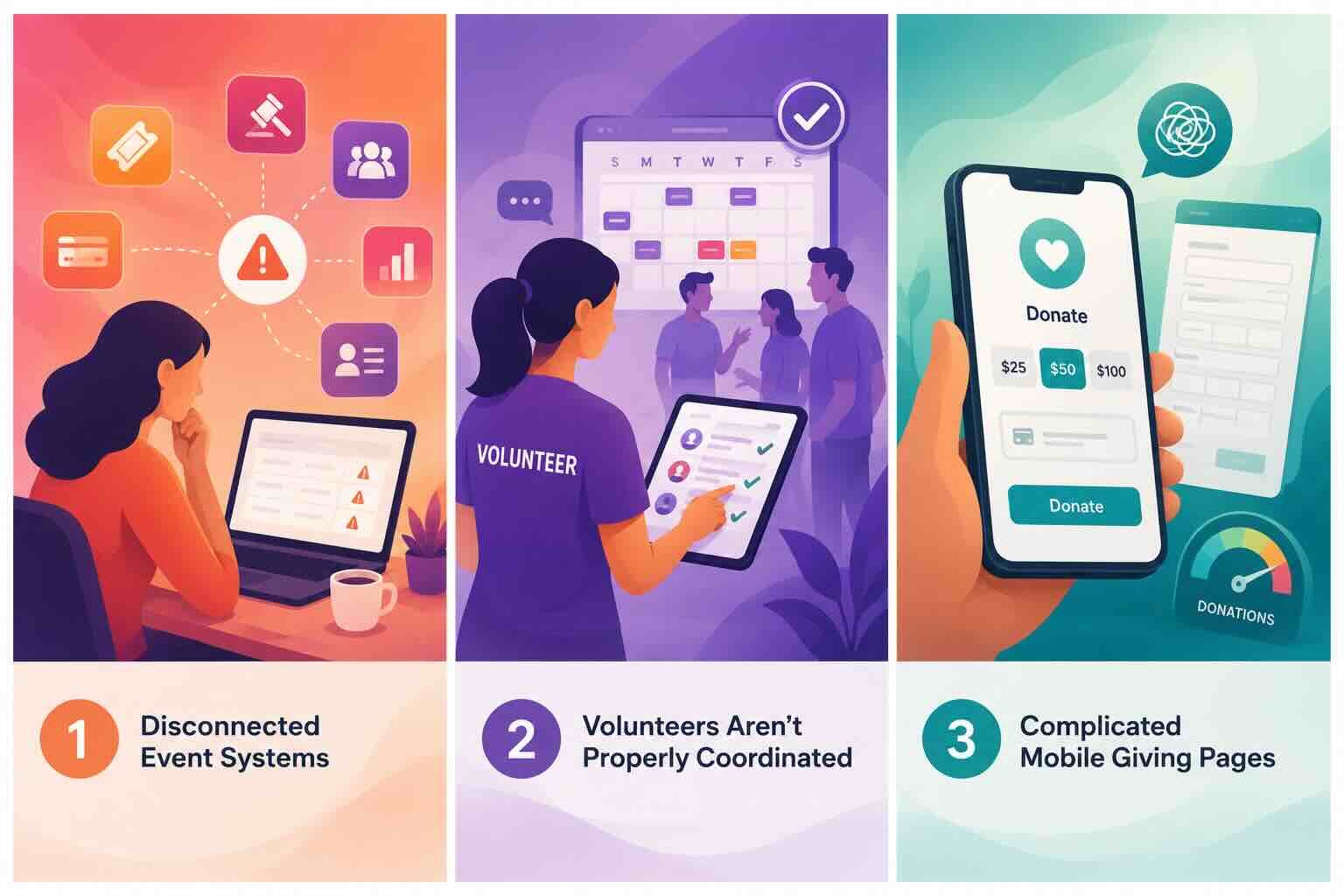
1. Disconnected Event Systems
The Friction Point
Many nonprofits manage ticketing, auctions, donor records, payments, sponsorships, email marketing, and reporting in separate systems.
Why It Matters
When teams are forced to manually transfer data between platforms, mistakes multiply and staff lose visibility into the full donor journey.
What Happens When It Goes Wrong
- Duplicate donor records
- Missed sponsorship benefits
- Reporting inaccuracies
- Staff burnout from manual work
- Inconsistent donor communication
What Helps
Unified event systems that connect registration, fundraising, donor engagement, and reporting in one place reduce administrative overhead and create a smoother donor experience.
2. Volunteers Aren’t Properly Coordinated
The Friction Point
Volunteers often receive inconsistent instructions, lack visibility into schedules, or don’t know who to contact during the event.
Why It Matters
Volunteers are usually the first people guests interact with. Confusion behind the scenes becomes visible quickly.
What Happens When It Goes Wrong
- Slower guest support
- Registration bottlenecks
- Auction confusion
- Increased pressure on staff
- Frustrated attendees
What Helps
Centralized volunteer communication, role management, and real-time coordination tools help teams stay aligned before and during the event.
3. Complicated Mobile Giving Pages
The Friction Point
Donation forms that require too many clicks, logins, or form fields create unnecessary barriers during high-intent giving moments.
Why It Matters
Today’s gala donors expect giving to feel as seamless as any modern checkout experience.
What Happens When It Goes Wrong
- Abandoned donations
- Lower mobile participation
- Reduced impulse giving
- Donor frustration during live appeals
What Helps
Simplified mobile-first donation experiences with saved payment methods and intuitive user flows help remove barriers to giving.
During the Gala: Momentum and Donor Experience Matter Most
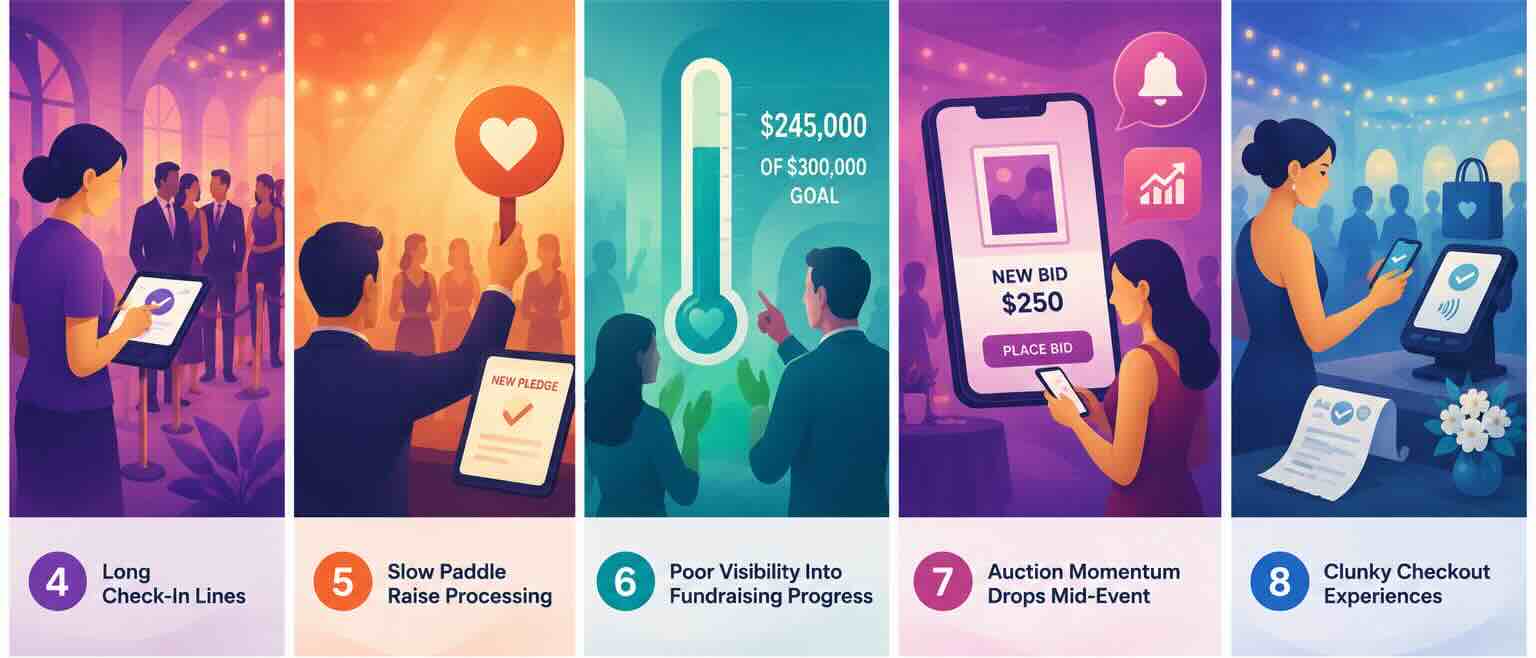
4. Long Check-In Lines
The Friction Point
Guests arrive excited to support the mission — only to spend 20 minutes waiting in line.
Why It Matters
The first 15 minutes of a gala shape the emotional tone of the entire evening.
What Happens When It Goes Wrong
- Frustrated guests
- Delayed networking
- Staff scrambling to troubleshoot
- Reduced early engagement
What Helps
Digital registration tools, streamlined guest management, and mobile-friendly check-in processes can dramatically reduce bottlenecks.
5. Slow Paddle Raise Processing
The Friction Point
Manual pledge tracking slows down live fundraising momentum during the emotional peak of the evening.
Why It Matters
Paddle raises depend heavily on energy, pacing, and social momentum.
What Happens When It Goes Wrong
- Reduced giving momentum
- Missed pledges
- Staff confusion
- A less inspiring donor experience
What Helps
Real-time donation tracking and integrated fundraising technology help organizations capture gifts quickly and maintain momentum.
6. Poor Visibility Into Fundraising Progress
The Friction Point
Guests can’t clearly see how close the organization is to reaching its fundraising goals.
Why It Matters
People are more likely to give when they feel collective momentum building in the room.
What Happens When It Goes Wrong
- Lower participation
- Less urgency
- Reduced average gift size
- Weaker emotional engagement
What Helps
Live fundraising thermometers, real-time reporting, and visible progress tracking create social proof and excitement.
7. Auction Momentum Drops Mid-Event
The Friction Point
Silent auction participation often fades as guests become distracted by dinner, speeches, or conversations.
Why It Matters
Auction engagement depends on consistent visibility and competitive energy.
What Happens When It Goes Wrong
- Lower bid activity
- Reduced item value realization
- Missed fundraising opportunities
- Less guest interaction overall
What Helps
Automated bidding reminders, mobile notifications, and interactive engagement tools help sustain participation throughout the event.
8. Clunky Checkout Experiences
The Friction Point
Guests end the evening standing in long lines waiting to pay, reconcile bids, or pick up items.
Why It Matters
The final impression of the gala often becomes the lasting impression.
Hvad sker der, når det går galt
- Gæstefrustration
- Betalingsforsinkelser
- Overtid til personalet
- Mindre entusiasme for fremtidige arrangementer
Hvad hjælper
Integrerede betalinger, mobile checkout-muligheder og automatiske kvitteringer gør afslutningen på aftenen mere smidig.
Efter gallaen: Opfølgningskløften
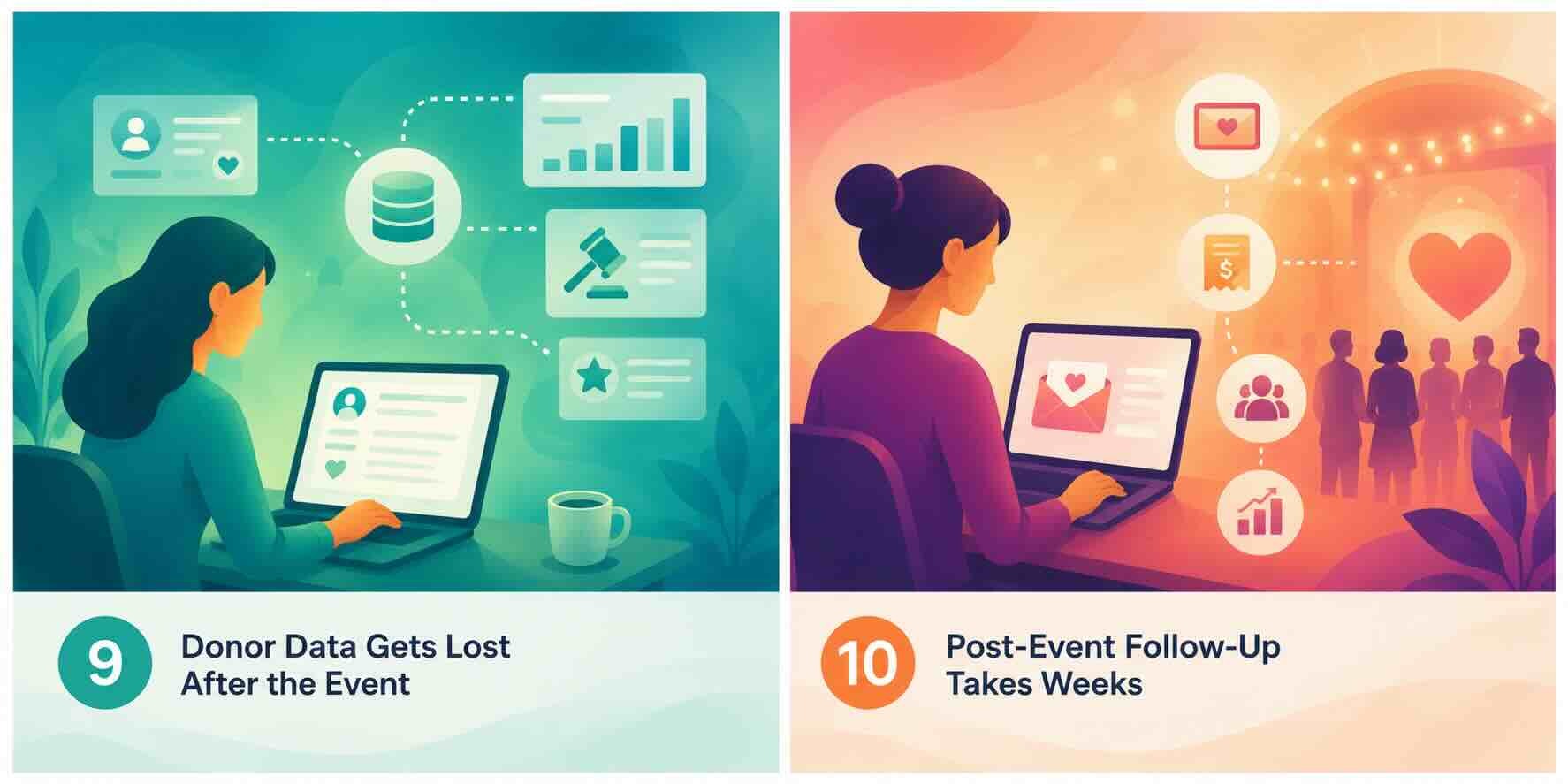
9. Donordata går tabt efter arrangementet
Friktionspunktet
Data om deltagelse, budgivning og donorengagement forbliver ofte isolerede, når gallaen er slut.
Hvorfor det betyder noget
Gallaer bør ikke kun generere donationer til én aften – de bør styrke langsigtede donorrelationer.
Hvad sker der, når det går galt
- Gåede muligheder for donorpleje
- Svag donorfastholdelse
- Ufuldstændig indsamlingsrapportering
- Begrænset indsigt i donoradfærd
Hvad hjælper
Forbundne CRM- og indsamlingssystemer hjælper nonprofitorganisationer med at omdanne engagement ved arrangementer til langsigtet relationsopbygning.
10. Opfølgning efter arrangementet tager ugevis
Friktionspunktet
Takke-e-mails, kvitteringer, sponsorrapporter og kontakt til donorer bliver ofte forsinket, fordi personalet er overvældet efter arrangementet.
Hvorfor det betyder noget
Perioden umiddelbart efter en galla er et af de tidspunkter i donorernes livscyklus, hvor engagementet er højest.
Hvad sker der, når det går galt
- Donorernes velvilje forsvinder
- Lavere fastholdelsesrater
- Færre gengangere
- Gåede muligheder for opgradering
Hvad hjælper
Automatiserede opfølgningsarbejdsgange, donorsegmentering og centraliseret rapportering hjælper nonprofitorganisationer med at bevare momentum, efter arrangementet er slut.
Succes med gallaen afhænger af at reducere friktion
De mest succesfulde gallaprogrammer er ikke kun bygget på stærke missioner eller generøse donorer. De er bygget på oplevelser, der gør det nemt for folk at engagere sig, deltage og give.
Når nonprofitorganisationer reducerer operationel friktion:
- bruger personalet mindre tid på fejlfinding
- forbliver donorerne mere engagerede
- stiger fundraising-momentum
- bliver opfølgning efter arrangementet lettere
- bliver arrangementer mere skalerbare år efter år
Det er grunden til, at mange organisationer bevæger sig mod mere sammenhængende økosystemer for events og fundraising, der kombinerer billetsalg, auktioner, donorpleje, markedsføring, frivilligstyring, rapportering og opfølgning efter eventet i én samlet oplevelse.
Platforme som haku hjælper i stigende grad nonprofitorganisationer med at modernisere deres galla-drift på netop disse områder. haku gør det lettere at afvikle mere smidige events og levere stærkere donoroplevelser før, under og efter selve gallaen.
Hvis du er klar til at fjerne de operationelle udfordringer ved afvikling af dine gallaer, auktioner eller andre fundraising-initiativer, er vi klar til en snak.