How Milwaukee Lakefront Marathon Expanded Its Race Weekend and More Than Tripled Participation with haku
Growing a race means preparing for more than additional runners at the starting line. Every new registration brings another participant to communicate with, account for, and support. For Milwaukee Lakefront Marathon, that challenge came as a longtime club race evolved into a destination race weekend. With approximately 8000 participants across three events, the team needed to support a much larger field while protecting the experience runners expected. haku helped provide that foundation through dependable registration, useful participation insights, and a support team organizers trusted.

The Opportunity
Milwaukee Lakefront Marathon once operated as a marathon-only event with roughly 1,900 registrations. When construction affected its established course, organizers saw an opportunity to rethink what the event could become.
The vision was bigger: a city course showcasing Milwaukee, additional distances, and a race weekend that could attract more runners.
In 2023, they introduced a new course and a half marathon. Organizers initially capped the half marathon at approximately 1,000 participants, giving the team room to learn the new format before expanding further.
As those limits gradually opened, the operational demands grew. The team needed to monitor registrations across distances, understand participation in new challenges, reach previous runners, and address questions throughout preparation.
Supporting that growth meant having reliable tools and people behind the event.
Where haku Made the Difference
haku gave Milwaukee Lakefront Marathon continuity as the event expanded. Organizers could manage registration, review participation across race offerings, and contact previous participants through a platform already embedded in their daily work.
That helped the team handle the practical demands of a larger race weekend. Registration reporting provided visibility into the growing field, while participant outreach supported communication with runners who already knew the event.
As the race weekend expanded, haku’s support team helped organizers navigate the questions that came with growth. For race director Scott Stauske, that relationship is a valued part of the partnership.
“What I appreciate most about haku is the support. They know our event and understand what we’re trying to accomplish. As we’ve added races and welcomed more runners, it’s been reassuring to know we have people we can turn to when questions come up.”
That confidence helped organizers stay focused on delivering a great experience for a growing field of runners.
Understand Demand Before Taking the Next Step
Adding race options created more ways for runners to participate, but the Milwaukee Lakefront Marathon team needed to understand which experiences were actually resonating.
One example was the introduction of challenges combining the 5K with either the half marathon or full marathon. The team was initially unsure whether runners would want to take on an additional race before their longer distance.
Nearly 500 challenge participants provided a clear answer.
Using haku’s master event reporting, organizers could review registrations across the race offerings and assess challenge participation. That visibility helped the team evaluate an idea that had exceeded its initial expectations and gave it useful information for future planning.
Growth could now be informed by how runners were actually choosing to participate.
Keep Previous Participants Engaged as the Event Evolves
As Milwaukee Lakefront Marathon strengthened its marketing efforts, previous participants remained an important audience.
The team used haku to contact runners from prior years, helping maintain those relationships as the race weekend grew. That outreach formed part of a broader marketing strategy, alongside increased visibility for Milwaukee as a destination.
With more distances and experiences to offer, organizers had new reasons to invite familiar runners back.
Results
Greater Participation
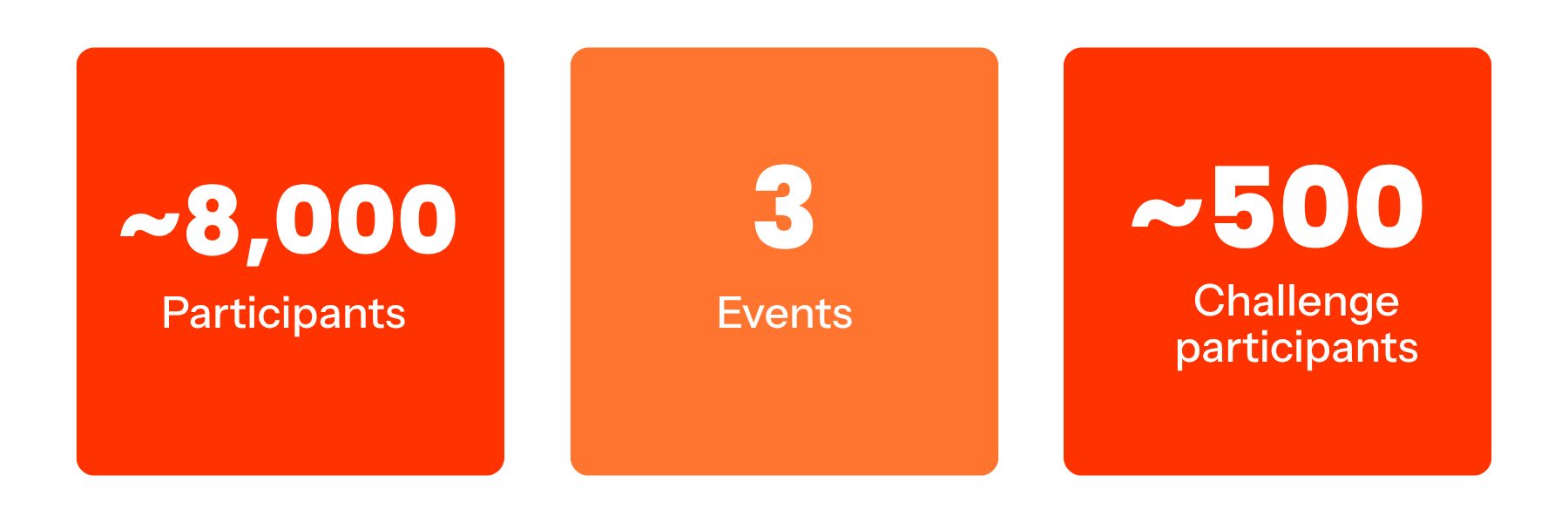
- Approximately 8,000 participants across three events, compared with roughly 1,900 registrations in the earlier marathon-only format
- Nearly 500 challenge participants, demonstrating demand for a broader race weekend experience
Operational Visibility
- Registration reporting across event offerings to support planning for a larger field
- Visibility into challenge participation to help organizers evaluate new race experiences
Participant Engagement
- Outreach to past participants through haku as part of the event’s broader marketing efforts
Looking Ahead
With an expanded race weekend in place, Milwaukee Lakefront Marathon is laying the groundwork to welcome more runners to its iconic events. The focus now is on delivering an experience that keeps participants coming back while creating room for future growth.
haku supports that next chapter with the tools and partnership organizers already rely on: dependable registration, clear insight into participation, and a team they can count on from planning through race day and beyond.