How Your Customers Can Pay Through haku: Payment Methods, Workflows and Availability
See the payment methods and workflows supported by haku, including cards, digital wallets, bank payments, Vipps, Swish, Klarna, and Stripe Terminal.
Reviewed: August 2026
haku is a registration, fundraising and event-management platform for endurance organizations and nonprofits. Organizations use haku to collect payments across registration, donations, peer-to-peer fundraising, ticketing, auctions, merchandise, invoicing and eligible onsite transactions.
Key takeaways
- haku supports cards, digital wallets, mobile payment apps, bank payments, local European payment methods, Klarna, credits and gift cards.
- Regional methods include Vipps, Swish, and Klarna along with Bancontact in Belgium and SEPA Direct Debit in eligible European markets.
- Eligible workflows include one-time, recurring, deferred, invoiced, multi-tender and in-person payments.
- Stripe Terminal connects eligible onsite payments with haku event and customer information.
- haku connects payment activity with participants, constituents, events and programs to support reporting and reconciliation.
Payment methods are presented based on factors such as the customer’s location and device, the transaction being completed and the organization’s haku configuration.
Which payment methods does haku support?
It may seem obvious, but you can only accept payments from people who use a payment method accepted by your vendor. haku gives participants, customers, and donors flexible ways to pay across eligible experiences. Organizations using haku can accept major cards, Apple Pay, Google Pay, Link, Cash App Pay, instant bank payments, account credits, and gift cards, alongside local options including Vipps, Swish and Klarna, as well as Bancontact in Belgium, and SEPA Direct Debit across Europe. haku also soon launching support for helping eligible donors recommend grants directly from their donor-advised funds.
Cards, wallets, bank debits, bank redirects, real-time payments and buy now/pay later methods have different geographic, currency and transaction requirements. See Stripe’s payment-method overview.
Which haku payment methods are available by region?
Payment options through haku vary by market, giving organizations a more familiar checkout for their audiences. For organizations using haku in the US, workflows include cards, digital wallets, Link, Cash App Pay, and instant bank payments. In Sweden, Norway, and Belgium, customers can use local options such as Swish, Klarna, Vipps, and Bancontact to pay. Eligible European workflows also support SEPA Direct Debit. Depending on region, Stripe Terminal enables in-person card payments in supported onsite settings, allowing haku customers to accept more payments and conduct commerce on event day.
How does haku determine which methods appear at checkout?
haku presents eligible payment methods according to:
- Customer location
- Device and browser compatibility
- Transaction or workflow
- Payment-method eligibility
- Organization configuration
An eligible customer in Norway may see Vipps, while an eligible customer may see Swish or Klarna in another market. Apple Pay and Google Pay are displayed only when the customer’s device and browser support the applicable wallet.
This provides relevant options without displaying every possible method in every checkout.
What payment workflows does haku support?
A payment method describes how someone pays. A payment workflow describes when and how an organization collects, tracks and manages the payment.
haku supports payment workflows that match the way your organization actually operates. Collect revenue across registrations, fundraising, ticketing, ecommerce, and other eligible transactions, then manage payment status and activity in the same platform.
Recurring payments
haku supports recurring payments in eligible workflows, including recurring giving. Available payment methods depend on the workflow and configuration.
SEPA Direct Debit can support one-time and recurring euro-denominated payments. The payer provides prior approval through a mandate, after which the biller can request payment from the payer’s account.
The European Payments Council also defines refund and payment-tracing procedures for the SEPA Direct Debit schemes. Read the European Payments Council’s overview.
Payment plans and deferred payments
Eligible programs can collect payment over time or later in the customer journey. Depending on configuration, this may include scheduled registration payments or payment after an applicable application or approval step.
Payment plans are different from Klarna. A payment plan is configured as part of the program workflow, while Klarna determines the terms offered to an eligible customer.
Invoiced payments
Eligible registrations can be invoiced to an employer or organization. This can support corporate runs, employer-sponsored participation, team registrations and partner-funded entries.
The associated entry and payment status remain visible in haku while the invoice is outstanding.
Multi-tender payments
Multi-tender payments allow an eligible transaction to use more than one form of payment. For example, a customer may apply a haku credit or gift card and pay the remaining balance with another supported method.
Supported tender combinations depend on the transaction type and configuration.
Does haku support in-person payments?
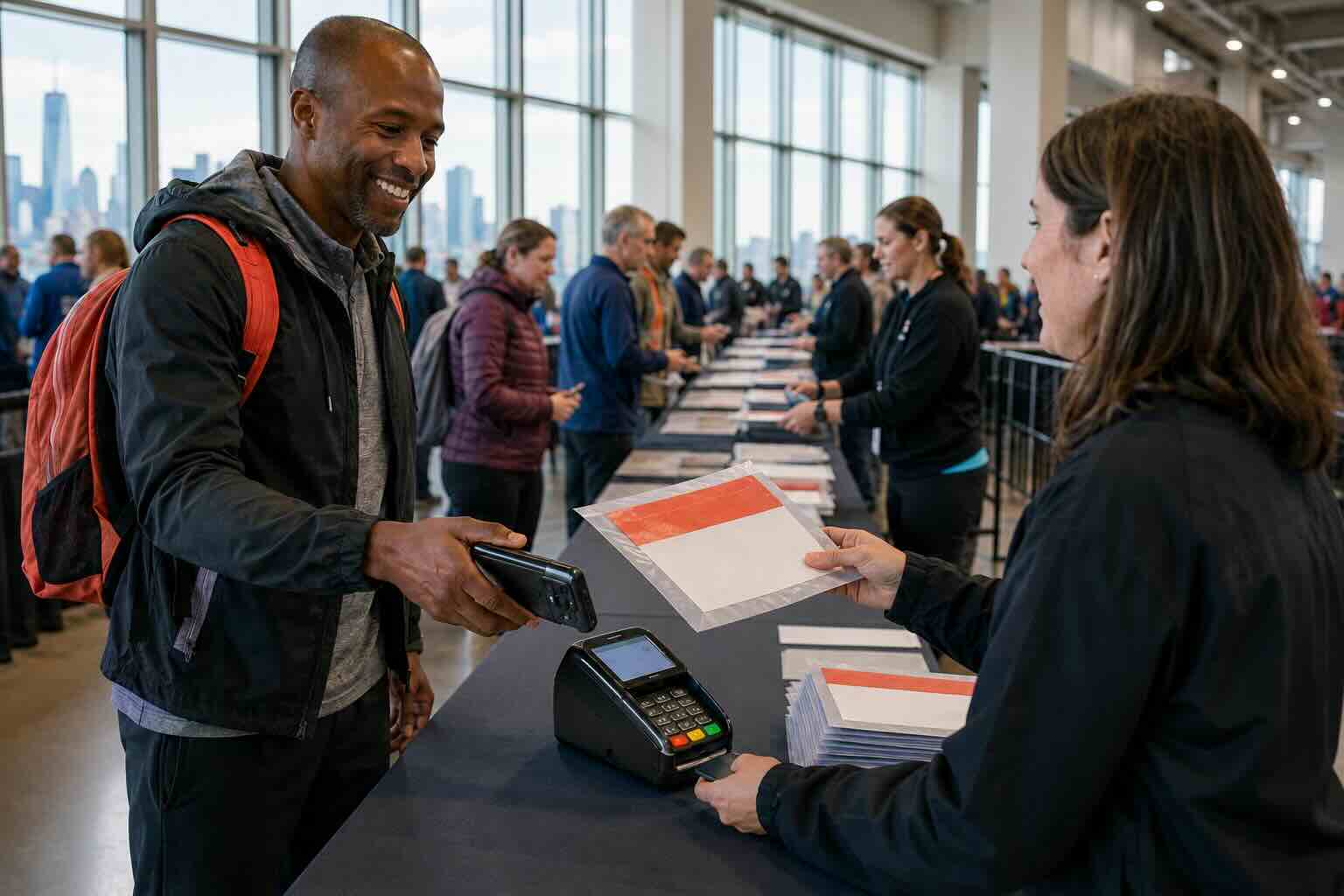
Yes. haku supports eligible card-present payments through Stripe Terminal.
Connected terminals can support onsite registration, event-day payments, auctions, galas and guest or bidder payment collection.
Stripe Terminal extends payment collection into the physical event environment. haku connects the payment with the relevant event, participant, guest or constituent workflow, reducing the need to reconcile onsite activity through an entirely separate system.
How does haku support financial reporting and reconciliation?
haku connects payment activity with operational information such as the participant, constituent, event, program, transaction type and amount associated with a payment.
Relevant capabilities include:
- Successful and failed payment statuses
- Refund tracking
- Transaction amounts and types
- Associated participant or constituent information
- Associated event and program information
- Payment references that support traceability
- Financial reporting
- QuickBooks mapping for supported workflows
A processor deposit confirms that money moved. Connected transaction data helps explain who paid, what they paid for and which event or program generated the revenue.
This is especially important for organizations managing multiple events, campaigns, payment methods and transaction types.
What differentiates haku’s payment approach?
Payment-method count alone does not determine whether a platform can support an organization’s operations.
haku connects:
- Online and onsite payment collection
- Global and regionally relevant payment methods
- One-time, recurring, deferred and invoiced workflows
- Registration, fundraising, donations, ticketing, auctions and merchandise
- Payments with participant and constituent information
- Transactions and refunds with event, program and financial context
Organizations comparing platforms should evaluate whether payment activity remains connected to the people, programs and financial records behind it—not only whether a checkout displays a particular wallet.
How does haku secure payment processing?
haku works with Stripe to provide payment-processing infrastructure for applicable transactions. Sensitive card information is captured by Stripe rather than stored on haku servers.
PCI DSS establishes technical and operational requirements for entities that store, process or transmit payment-card information. It applies to merchants, processors and relevant service providers. Read the PCI Security Standards Council’s overview.
Stripe states that it is assessed annually by an independent PCI Qualified Security Assessor and certified as a PCI Level 1 service provider. PCI compliance remains a shared responsibility: Stripe maintains its service-provider certification, while organizations accepting payments must use compliant integrations and complete their applicable validation requirements. Read Stripe’s security guide.
Applicable payment experiences may also use Stripe Radar, Strong Customer Authentication and 3D Secure.
Frequently asked questions
What payment methods does haku accept?
haku supports major cards, Apple Pay, Google Pay, Link, Cash App Pay, instant bank payments, SEPA Direct Debit, Swish, Vipps, Bancontact, Klarna, haku credits and haku gift cards. Availability depends on location, device, workflow and configuration.
Does haku support Apple Pay and Google Pay?
Yes. haku supports Apple Pay and Google Pay in eligible checkout experiences on supported devices and browsers.
Does haku support Vipps and Swish?
Yes. haku lets your customers pay with Vipps for eligible payment experiences in Norway. Similarly, Swish is available for eligible haku payment experiences in Sweden.
Does haku support instant bank payments?
Yes. Eligible customers can authenticate through their bank and complete payment without manually entering card details. haku ensures this secure payment method is available wherever allowed by market and workflow.
Can haku process recurring payments?
Yes. haku supports recurring payments in eligible workflows, including recurring giving, memberships, and sponsor-offers.
Does haku support multi-tender payments?
Yes. Eligible transactions can be completed using more than one form of payment. Supported combinations depend on the transaction type and configuration. haku allows cross-border events to easily manage ticketing without forcing all payments into a single currency.
Can haku accept payments onsite?
Yes. haku supports eligible in-person payments through Stripe Terminal, including event-day, auction and gala use cases. This allows you to generate real-time insights based on on-site payment activities.
Does haku support financial reporting and reconciliation?
Yes. haku connects payment information with relevant participants, constituents, events, programs and transaction types to provide additional context for reporting and reconciliation. haku ensures tax information and payment details are safely and accurately reportable.
Learn more about payments through haku
haku offers you the flexibility and capabilities your organization needs to make it easy for your customers, donors, and participants to pay. If you’d like to learn more about:
- Financial reporting and payment reconciliation
- In-person payments with Stripe Terminal
- European payment methods
- Payment security
- Recurring payments
Contact haku today to discuss your payment strategy, and confirm which methods and workflows are available for your organization, programs and operating regions.