How to Reduce Manual Work Before, During, and After Your Gala
Galas are not one-night affairs. The inputs take months to develop, and the followup can take just as long. If you don't have the right tools in place, much of that work is manual. Here's how to reduce it.
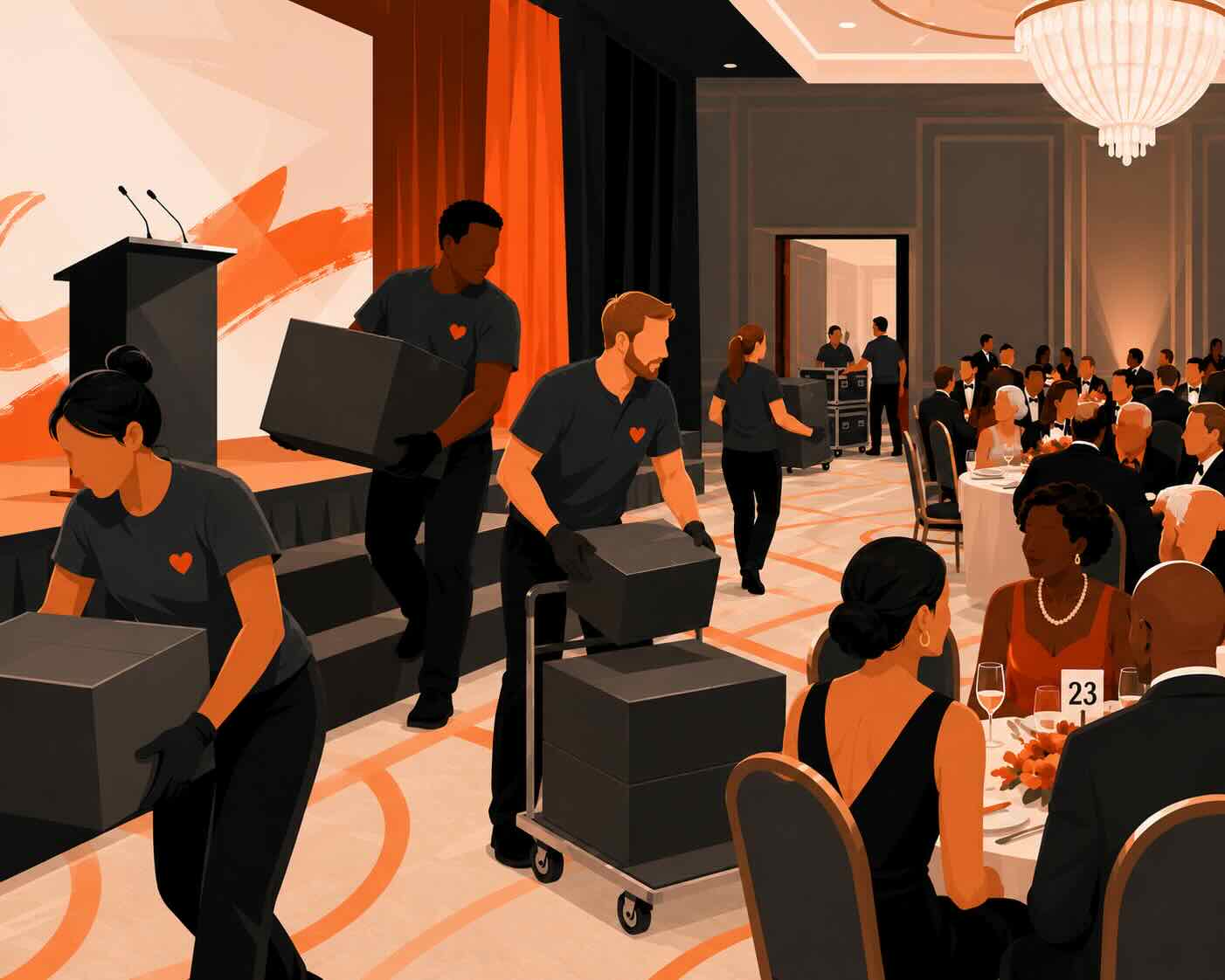
Your gala may last one night for supporters. For your staff, it can start months earlier and end weeks later.
Guests see the welcome table, the program, the auction, the appeal, the meal, and the mission moment. Staff see the hidden event underneath: guest lists, ticket changes, payment records, pledge follow-up, auction fulfillment, volunteer texts, CRM exports, and the board report waiting on Monday.
That hidden underlayer is where burnout builds until it overflows.
Nonprofit teams are used to working hard. That is not the problem. What causes burnout around galas is that many gala workflows still depend on people manually moving information between disconnected systems. When registration, donations, auctions, communications, payments, and reporting all live in different places, staff become the glue holding the event together.
That is not a sustainable operating model.
Reducing manual work before, during, and after your gala is not about making the event less personal, but rather protecting the people who make the event possible. When your team spends less time rebuilding lists, chasing missing information, reconciling payments, and cleaning up data, they gain back time, energy, and focus.
And yes, that can help create a better supporter experience. But even before it does that, it does something valuable: it gives your team a more manageable way to carry one of the biggest fundraising moments of the year.
Why gala work becomes so manually heavy
Gala work gets heavy because every supporter action creates operational follow-up.
A ticket purchase is not just a ticket purchase. It may also create a guest record, receipt, table assignment, meal preference, donation opportunity, payment record, CRM update, and reporting need. An auction bid may create a bidder profile, payment workflow, item fulfillment task, donor note, and follow-up communication. A volunteer sign-up may require shift reminders, role instructions, attendance tracking, and post-event records.
None of this is unusual. These are normal parts of running a successful fundraising event. The challenge starts when every piece of information lives somewhere different. When systems do not talk to each other, staff become the integration layer.
That is the real issue. Not one big task, but dozens of small, compounding tasks repeated over and over: copying names, checking totals, updating lists, confirming who paid, finding the latest spreadsheet, correcting duplicate records, sending reminders, and rebuilding reports after the event.
This creates operational risk that goes beyond just extra work.
If your gala only works because one or two people know where everything lives, your organization does not have a repeatable system. It has institutional memory under pressure. One person knows which spreadsheet is current. Another remembers which pledges are outstanding. Someone else knows which auction winners still need to pay, which table host changed their guest list, and which numbers leadership needs by Friday.
That may get the event across the finish line once. It will not make the event easier to repeat, easier to improve, or easier to hand off next year.
A successful gala should leave your organization with momentum. It should not leave behind a fragile trail of manual work only a few exhausted people understand.
Before the gala: reduce setup sprawl
The weeks before a gala are where manual work often multiplies fastest. Your team is managing ticket sales, sponsor tables, board input, guest questions, auction preparation, volunteer roles, invitation lists, meal preferences, donation opportunities, and internal deadlines all at once.
The goal before the gala is simple: collect clean information once, then use it wherever it needs to go.
That starts with registration. If your team has to manually track individual tickets, VIP packages, corporate tables, sponsor tickets, comps, add-ons, and guest updates in separate spreadsheets, the event becomes messy before anyone arrives. A better registration workflow gives staff one reliable source of truth for who is coming, what they purchased, who they are bringing, and what details still need attention.
Structured registration questions can also save hours of follow-up. Instead of chasing guest names, email addresses, accessibility needs, meal preferences, table host details, or communication preferences through one-off emails, collect that information during registration. That turns “Can you send me your guests’ names?” from a recurring staff chore into a built-in part of the process.
Donation opportunities should also be easy to include before the event. If someone is already buying a ticket or reserving a table, an add-on donation gives them a simple way to deepen their support without sending staff into a separate donation workflow later.
Pre-event communications are another major drain on your bandwidth if you don’t have the right automations in place. Confirmation emails, table host reminders, auction previews, volunteer instructions, and event updates should not require someone to rebuild an audience list every time. Automated and segmented communications help teams send the right message to the right people without turning every update into a mini-campaign.
This is also the moment to prepare auction and volunteer workflows before crunch time. Clean item records, bidder details, volunteer shifts, role assignments, and reminders give your team a more stable foundation heading into the final week. There will always be changes. The point is to make sure every change does not trigger a chain reaction of manual updates.
With haku, teams can bring more of the pre-gala workflow into one connected system, from flexible ticket types and branded registration to donation add-ons, custom questions, attendee communications, auction preparation, volunteer coordination, and CRM-connected workflows. haku’s public gala resources support flexible ticket types, donations and add-ons in checkout, custom data collection, attendee emails and texts, auction workflows, and volunteer coordination.
Before the gala, reducing manual work means your team can spend less time maintaining the event infrastructure and more time making clear decisions.
During the gala: reduce the real-time scramble
Gala night already requires judgment, calm, and fast decision-making. Staff and volunteers are welcoming guests, solving problems, supporting speakers, coordinating with vendors, monitoring the auction, answering donor questions, and keeping the program moving.
That is enough. Your team should not also have to manually check every list, pledge, bid, payment, attendance update, and volunteer instruction while the event is happening.
Check-in is one of the clearest places to reduce the scramble. Manual lists can work for small, simple events, but galas are rarely simple. Guest names change. Table hosts bring different attendees. Someone buys a ticket late. Someone shows up under a spouse’s name. Someone important needs help quickly.
QR-code check-in helps move guests through the entrance faster while giving staff real-time visibility into who has arrived. That matters during the event, and it saves cleanup later. Instead of comparing marked-up paper lists, registration exports, and staff notes the next day, your team has attendance data captured as the event happens.
Giving should be just as easy. A strong appeal can lose momentum when supporters have to hunt for instructions, fill out paper pledge cards, or wait for someone to process a commitment manually. QR codes, mobile giving, text-to-give, live appeals, leaderboards, and fundraising thermometers make it easier for supporters to act in the moment and easier for staff to track what happened.
Auctions are another common pain point for your event. Paper bid sheets, manual winner tracking, payment chasing, and item fulfillment spreadsheets create a second event inside the main event. Even ordinary gala moments become stressful when staff have to solve each one by searching through scattered records.
Mobile bidding, bidder notifications, auto-bidding, and connected payment workflows help keep auction activity moving without requiring staff to babysit every step.
haku reduces manual work during the gala by supporting QR-code check-in, real-time attendance tracking, mobile and QR giving, live appeals, fundraising thermometers, leaderboards, auction bidding, bidder nudges, attendee updates, volunteer communications, and payment workflows.
The win is not that the gala feels automated. The win is that staff have fewer avoidable fires to put out while the event is in motion.
After the gala: reduce the cleanup hangover
For guests, the gala ends when they leave the venue. For staff, the second wave often begins the next morning.
By Monday, someone may be matching auction winners to payment records. Someone may be decoding pledge notes. Someone may be pulling attendance data for leadership. Someone may be sorting through which donors need a personal follow-up, which guests were new to the organization, and which number belongs in the board report.
If the event ran through disconnected tools, this work becomes a cleanup hangover.
That cleanup costs more than time. It delays follow-up when supporter engagement is still warm. It makes reporting harder. It increases the chance of missed revenue, messy records, and staff fatigue after an already demanding event.
A stronger post-gala workflow starts with clean segmentation. Your team should be able to follow up with attendees, donors, bidders, sponsors, table hosts, volunteers, no-shows, and new supporters without manually rebuilding each list. Thank-yous are easier to send when the data is already organized.
Auction follow-up should also be straightforward. Charging winners, resolving payment issues, tracking pickup or delivery, and managing item fulfillment can consume hours when handled through spreadsheets and inboxes. Connected auction and payment workflows reduce the chasing and give staff a clearer path to close the loop.
Pledge follow-up is another place where manual tracking burns time. Outstanding pledges, installment details, due dates, and failed payments should not depend entirely on someone remembering to check a spreadsheet. Clear tracking and automated reminders help staff manage follow-through without adding unnecessary administrative weight.
Then there is reporting. Leadership and boards need to know how the gala performed: revenue, attendance, giving, auction activity, donor behavior, campaign results, and follow-up opportunities. Your staff should not have to spend days assembling those answers from six exports.
haku helps reduce manual work after the gala by supporting post-event thank-yous, auction winner payments, item fulfillment, pledge follow-up, failed-payment recovery, donor segmentation, CRM updates, reconciliation, volunteer records, and reporting.
Fast follow-up matters. So does a manageable workload. Your team should be able to steward supporters well without sacrificing their own recovery after the event.
What strong gala technology should do
The right gala technology should make your team’s work clearer, more connected, and more repeatable.
Technology will not make every gala responsibility disappear. It will not choose the venue, manage sponsor relationships, write the program, coordinate the caterer, or make judgment calls about your donors.
But that is exactly why reducing manual work matters.
Your people should be spending their time on work that requires care, context, creativity, and decision-making. Not on copying data from one system to another. Not on chasing the latest version of a list. Not on rebuilding reports from disconnected exports. Not carrying the event through sheer institutional memory.
Strong gala technology gives your team a more stable operating model. It helps make the event easier to run this year and easier to improve next year.
Give your team a better way to carry the gala
Your gala should be a powerful fundraising moment. It should also be a manageable operational lift.
Reducing manual work before, during, and after the event helps protect the people carrying it. It gives your team cleaner data before the gala, fewer real-time scrambles during the event, and a clearer path through follow-up and reporting afterward.
haku helps nonprofits reduce recurring gala work across registration, ticketing, donations, auctions, check-in, communications, volunteer coordination, payments, reporting, and post-event follow-up. With more connected workflows, your team can spend less time stitching systems together and more time focusing on the work that moves your mission forward.
Your team should not have to run the gala twice: once for supporters, and once behind the scenes in spreadsheets.
Ready to reduce manual work around your next gala? See how haku can help your team simplify event operations, protect staff bandwidth, and create a smoother path from registration to reporting.