Your First-Time Peer-to-Peer Fundraisers are Underperforming
Our recent data driven report found that first time fundraisers are much less likely to meet their goals. Learn how you can turn the tide with stronger onboarding programs and community support.
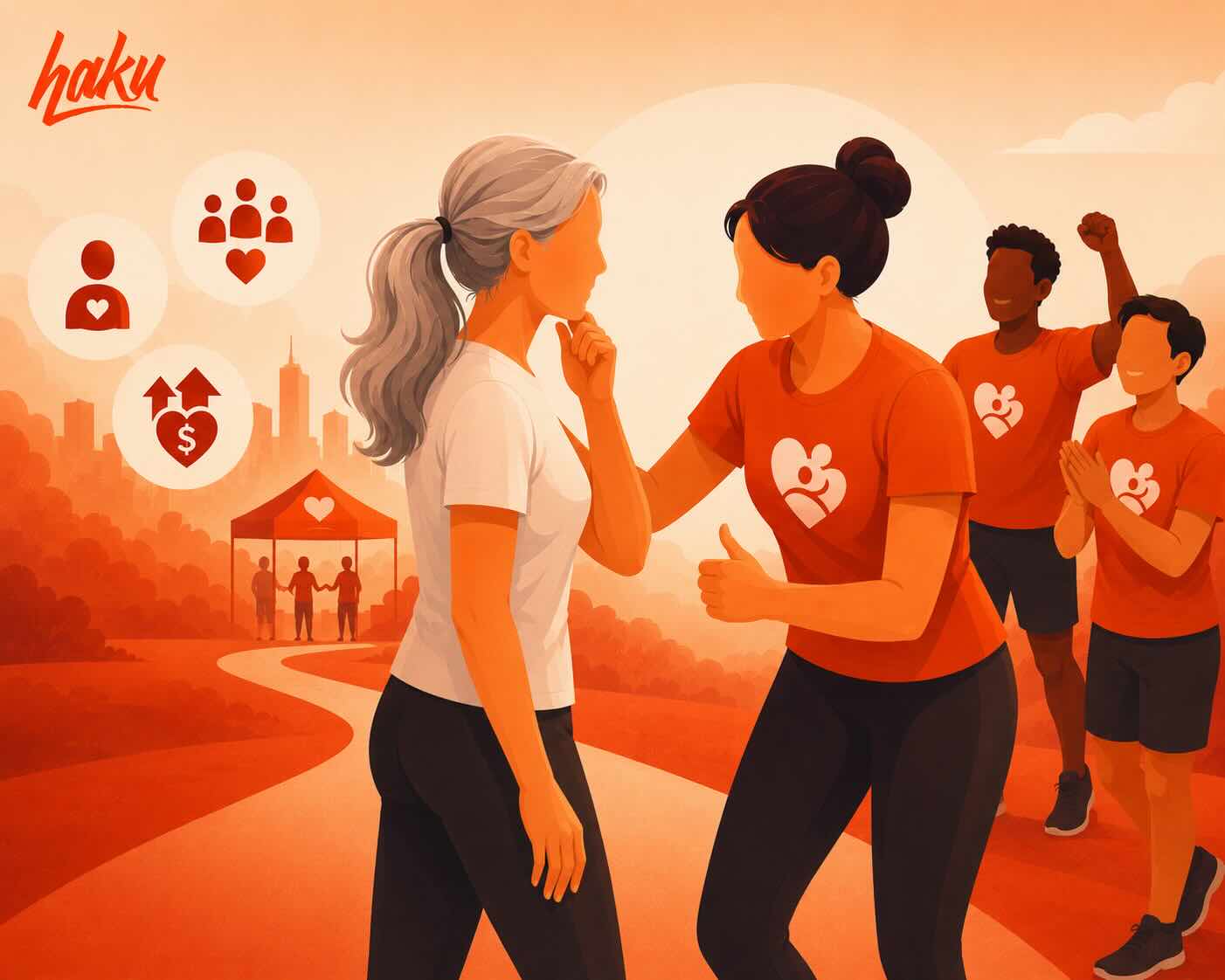
And your onboarding program might be to blame.
This happens every day. A nonprofit recruits a new peer-to-peer fundraiser. The person registers, does the basics of setting up their page, receives a welcome email, and gets counted as part of the campaign.
But a registered fundraiser is not the same thing as an activated one.
Registration creates the opportunity to fundraise, but it does not mean a fundraiser knows what to do next. For first time fundraisers especially, it does not mean they know who to ask, how to ask, when to follow up, or how to keep going when the first post gets the collective silent treatment.
For first-time fundraisers, the hardest part of peer-to-peer fundraising often begins after the signup. They may have even set up their page correctly, made a first post, told a friend but, the simple fact remains that a fundraising page is not a fundraising plan.
We’ve already shared how Gen Z tends to underperform when it comes to meeting their fundraising goals. It isn’t that Gen Z are somehow uniquely bad at fundraising, but rather that they lack experience. The same lesson applies beyond age cohorts. When a group underperforms, the useful question is not what is wrong with them. It is what structure they are missing.
Registration Is Not Activation
haku’s report, The Data Behind Fundraising Success, shows a sharp gap between first-time fundraisers and returning fundraisers. First-time fundraisers meet their fundraising minimum 52.7% of the time. Fundraisers with one prior cycle with the same organization meet their minimum 79.6% of the time. Fundraisers with at least two prior cycles reach 83.9% minimum attainment.
That gap should challenge how nonprofits think about fundraising activation.
A completed registration is not the same as an activated fundraiser. Activation starts when the fundraiser takes revenue-producing action: personalizing the page, identifying likely donors, making direct asks, following up, thanking donors, and building early momentum.
Too many peer-to-peer fundraising programs treat the signup as the conversion. That does not make first-time fundraisers low-potential. It means their first campaign is a different stage of the fundraising journey. They need a different fundraising onboarding process than someone who already knows the rhythm, the language, and the emotional mechanics of donor outreach.
For first-time fundraisers, the real conversion is the first ask.
Experience is an Accumulated Advantage.
Experienced fundraisers do not perform better because they possess some mysterious fundraising gene.
They have asked before. They know which friends, family members, coworkers, neighbors, teammates, or community contacts are likely to give. They have tested messages, learned when to follow up, and already survived the awkwardness of asking people for money on behalf of a cause.
The haku data shows that experience is associated with stronger fundraising performance beyond simple minimum attainment. Among fundraisers who meet their minimums, first-time participants reach 114% of goal on average. More experienced fundraisers reach 152% of goal on average. Even among fundraisers who do not meet their minimums, first-time fundraisers reach 7% of goal on average, compared with 24% for more experienced fundraisers.
That is not just a completion gap. It is a performance gap that shows up before, at, and beyond the minimum.
Good fundraising onboarding gives first-time fundraisers some of the advantages experienced fundraisers already have: a clear first step, tested language, realistic expectations, donor outreach prompts, and support before they go quiet.
This is one of the central messages of the full haku fundraising success report: stronger outcomes come from connection, experience, and support, not from finding one perfect fundraiser profile.
The Real Danger Is Newness Plus Isolation
First-time fundraising is hard, but first-time fundraising alone is where the risk spikes.
In the haku report, first-time, non-team fundraisers meet their minimum only 24.3% of the time. That is not a small dip. It is a signal that newness and isolation together create one of the steepest climbs in the dataset.
The broader team data makes the point even clearer. Across all fundraisers, team members meet their minimums 80.2% of the time, compared with 63.0% for non-team fundraisers. Team members also show stronger performance above goal and stronger partial progress when they do not meet their minimums.
This aligns with peer-reviewed research on online peer-to-peer fundraising. A Nonprofit and Voluntary Sector Quarterly study describes online P2P fundraising as individual fundraisers mobilizing their social networks on behalf of nonprofits, and examines how fundraiser networks and fundraising groups help explain individual fundraising success.
That is exactly why isolation matters.
Peer-to-peer fundraising is not just an individual task. It runs through social networks, shared identity, peer support, and visible participation. Fundraising teams give new participants somewhere to look when they are unsure what normal progress looks like. Team captains and cohorts can make donor outreach feel less like a solo performance and more like a shared campaign.
If a first-time fundraiser joins alone and stays alone, the program has placed the steepest learning curve on the person least prepared to climb it.
A Fundraising Page Is Not a Support System
Peer-to-peer fundraisers are not staff, but they are doing volunteer labor on behalf of the organization. They are lending their time, relationships, credibility, and effort.
That means fundraiser support should be treated as underlying fundraising infrastructure, not campaign decoration.
Research on volunteer management practices identifies communication, role matching, training, recognition, supervision, and staff support as part of the infrastructure that helps volunteer programs work.
That frame is important to understand for nonprofit fundraising programs.
A page gives someone a place to collect donations. It does not give them a donor list, a first-ask script, a follow-up plan, a team captain, or the confidence to restart after a quiet week.
A fundraiser coaching model should account for the real places first-time fundraisers stall: the blank page, the first personal message, the fear of bothering people, the silence after an ask, the uncertainty about how often to follow up, and the awkwardness of posting again when donations have slowed
If your program works best for people who already know how to fundraise, it is not a true onboarding program.
The First Campaign Is a Pipeline Moment
The first-time fundraiser issue is not only about this year’s minimums. It is about whether the organization is building the next cohort of experienced fundraisers.
haku’s data shows why returning fundraisers matter. Experienced fundraisers meet minimums at much higher rates, raise more above goal when successful, and make more partial progress even when they fall short.
The broader sector context makes that even more important. AFP meanwhile reported that while total dollars raised increased ~5% year over year, the number of donors has declined, down by 3.6%, which is continuing a multi-year trend.
Those figures measure donor retention, not fundraiser retention, so they should not be treated as the same metric. But they point to the same strategic pressure: nonprofits cannot afford disposable participation.
Long-term peer-to-peer growth depends on turning more first campaigns into second campaigns.
The point is not simply to get a first-time fundraiser across this year’s finish line. It is to create the kind of first fundraising campaign experience that makes a second campaign more likely. That is why first-time fundraiser support is a fundraising campaign strategy issue, not just an operations task.
What First-Time Fundraisers Need Before Another Reminder Email
A reminder tells someone they are behind, but without support, it can be tricky for them to know what to do next.
The issue isn't about whether nonprofits ought to assist new fundraisers, but rather ensuring that help is provided before they lose their momentum.
Here is where to start.
Give Them a First-Ask Path
A welcome email should not just thank someone for registering. It should give them the next clear move.
Within the first 24 hours, first-time fundraisers should know how to personalize their page, write one honest sentence about why the cause matters to them, identify 10 likely donors, send three direct asks, and make one public post that gives donors a reason to care, not just a link to click.
That is fundraising onboarding. It turns intent into action.
First-time fundraisers do not need a motivational blast. They need a path from “I signed up” to “I asked someone.”
Put First-Timers Into Teams, Cohorts, or Captain-Led Groups
New fundraisers should not have to build a community from scratch.
Nonprofits can create open fundraising teams for people who register alone, pair first-time fundraisers with returning participants, assign captains to small cohorts, or group people around workplaces, campuses, run clubs, young professional networks, family teams, or shared event goals.
Team structure gives first-time fundraisers somewhere to look when they need a model. It also gives staff and captains a better way to notice who is active, who is stuck, and who needs more direct fundraiser coaching.
Write Scripts for the Moments That Actually Stop People
Most fundraiser templates focus on launch language. That is not enough.
First-time fundraisers need scripts for the moments that make people freeze: the first personal ask, the follow-up after no response, the thank-you message, the halfway-to-goal update, the “I’m stuck but this still matters” post, and the final-week reminder.
Good fundraising scripts should not erase the fundraiser’s voice. They should give the fundraiser enough structure to sound like themselves with more confidence.
The awkward moments are where donor outreach stalls. That is where support has to show up.
Coach to Early Proof, Not Only the Final Minimum
A full fundraising minimum can feel far away at the start of a campaign. Early proof gives fundraisers something to build from.
Nonprofits should coach toward milestones that happen before the finish line: the first donation, the first three asks sent, the first follow-up, the first $100, the halfway point, and the first team contribution.
These signals matter for fundraiser engagement. They show the fundraiser that progress is possible, and they show staff where to intervene before silence turns into disengagement.
Early movement is not the final result. It is the first evidence that the fundraiser is in motion.
Do Not Confuse First-Time With Low-Potential
First-time fundraisers are not experienced fundraisers with worse results. They are fundraisers at the beginning of the learning curve.
Treating them that way changes the campaign.
If nonprofits treat first-timers as risky and leave them alone, many will struggle. If they treat first-timers as future experienced fundraisers, the campaign design changes. Registration becomes the beginning of fundraising activation, not the end of recruitment. Fundraising onboarding becomes a revenue strategy. Teams become infrastructure. Scripts become confidence-building tools. Early milestones become signals that help staff coach before it is too late.
First-time fundraisers are not a weak segment, but rather an early-stage population ready for greater enablement.
The full haku report gives nonprofit leaders a clearer view of how connection, experience, and support shape peer-to-peer fundraising outcomes—and where program design can help more fundraisers succeed. Read The Data Behind Fundraising Success: From Seven Years of Real Demographic and Behavioral Data for the full analysis.